Engagement context
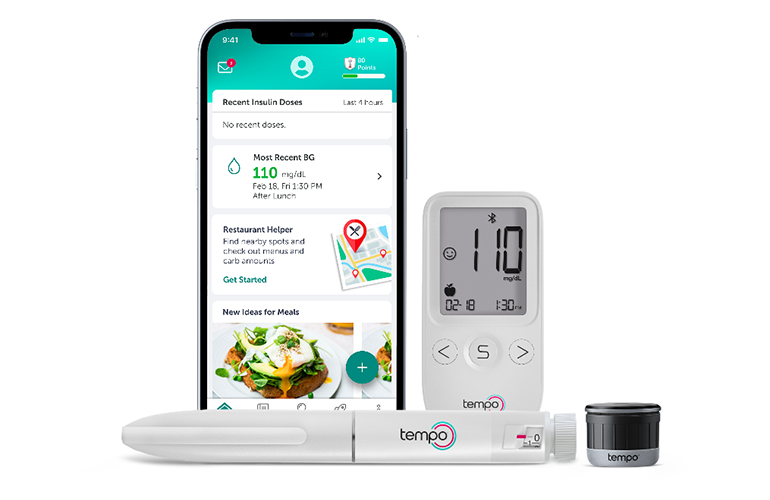
Android Architect at AgreeYa Solutions, contracted to Deloitte’s engagement with Eli Lilly on the Tempo Personalized Diabetes Management Platform — January 2020 through August 2021. The platform spanned a connected insulin pen (Tempo Pen), a Bluetooth smart button that tracked dosing events (Tempo Smart Button), and a companion mobile application (TempoSmart, developed in partnership with Welldoc) — all operating together as a Class II Software as a Medical Device under FDA jurisdiction. The Tempo Smart Button received CE marking in August 2022 and FDA 510(k) clearance in September 2022.
The problem
Software that touches insulin dosing operates under a regulatory regime most mobile engineering teams have never encountered. The deliverable is not just an app — it is an auditable artifact. Every architectural decision, every component, every integration lives in documentation that has to survive FDA review. Code quality alone is not enough; the paper trail has to be equally rigorous.
The engagement had two simultaneous challenges. First: the technical one — building a connected medical device app that paired reliably with Bluetooth hardware, operated correctly under real clinical usage conditions, and met the documentation standards for a Class II 510(k) submission. Second: the organizational one — the Android development team was offshore, 10+ engineers, operating in a different time zone. Work had to hand off smoothly at the end of every business day and resume correctly the next morning without architectural drift or duplicated effort.
A third problem emerged mid-engagement: the platform had ambitions that would eventually require code to run on both Android and iOS, and building two separate native codebases from scratch was going to be expensive. The team needed a credible path to shared logic before the iOS build started.
The work
- Served as lead Android architect on a Class II SaMD connected diabetes platform — the regulatory bar most mobile engineering teams have never operated under.
- Delivered the detailed technical documentation supporting FDA and regulatory clearance — the deliverable was not only code but an audit trail built to survive regulator review.
- Designed architecture boilerplates and built major shared components so the offshore team could move in parallel on feature work without drifting from the established patterns.
- Managed the 10+ person offshore Android team across a 24-hour continuous development cycle — onshore architecture and decision-making handed off at day’s end, offshore continuation through the night, integration reviewed at start of next day.
- Migrated the Tempo application to a cloud environment to improve platform stability, performance, and the velocity of future feature additions.
- Built a Kotlin Multi-Platform proof-of-concept demonstrating that business logic could be shared across Android and iOS — reducing projected future development time by more than two months when adopted.
- Secured a second contract for a related application in the same platform — a rare outcome where performance on the initial engagement earned a direct follow-on before the first engagement closed.
The outcome
Class II FDA 510(k) clearance landed in September 2022 (K212217, cleared 2022-09-16, regulation 21 CFR 880.5860, product code QOG). CE marking preceded it in August 2022. The platform — a connected insulin pen, a smart dosing-event tracker, and a companion mobile app — reached the market as Lilly’s Tempo Personalized Diabetes Management Platform.

U.S. Food and Drug Administration — public-domain federal mark. Shown as a reference to the public 510(k) regulatory record, not as an endorsement. FDA 510(k) K212217 record →
The offshore team produced continuously without architectural drift. The 24-hour development cycle worked because the handoff structure was designed for it: clear interfaces, documented patterns, explicit handoff artifacts at the end of every onshore day.
The KMM proof-of-concept cut the projected iOS development runway by more than two months. That is not an estimate — it is the figure the team arrived at when the POC was reviewed and the alternative (full native iOS build from scratch) was costed alongside it.
What it demonstrates
This engagement ran in two modes simultaneously, which is the strongest evidence for the “any layer” pitch. Build & Hand-Off: architecture designed to be owned by others, documentation built to survive audit, a codebase structured so the offshore team could work independently without constant guidance. Lead & Coordinate: 10+ engineers across a 24-hour cycle, architectural governance across time zones, offshore delivery that landed without rework.
The regulated-industry framing is real. Class II SaMD is a specific regulatory classification. The 510(k) clearance is a matter of public FDA record. Clients in healthcare, pharma, or any regulated vertical evaluating a contractor’s familiarity with that environment have a verifiable proof point here, not a claim.
“I worked with Mo on developing leading edge digital health solutions. As a technical lead on our Android platform, Mo demonstrated deep technical expertise and forward-thinking architecture strategy. Mo showed exceptional range in his ability to be deeply technical while simultaneously being able to clearly communicate functional and business impacts to non-technical stakeholders. As a teammate, Mo was flexible to changing needs and requirements and had the ability to step in wherever his team needed the most help. I would always go to Mo for challenging technical roles.”
Visual artifacts
Tempo product imagery is rendered as the hero above (Tempo Smart Button + TempoSmart app + Tempo Pen). Image courtesy of Eli Lilly via Drug Delivery Business editorial coverage. FDA 510(k) K212217 (cleared 2022-09-16) is a matter of public record at fda.report/PMN/K212217.